


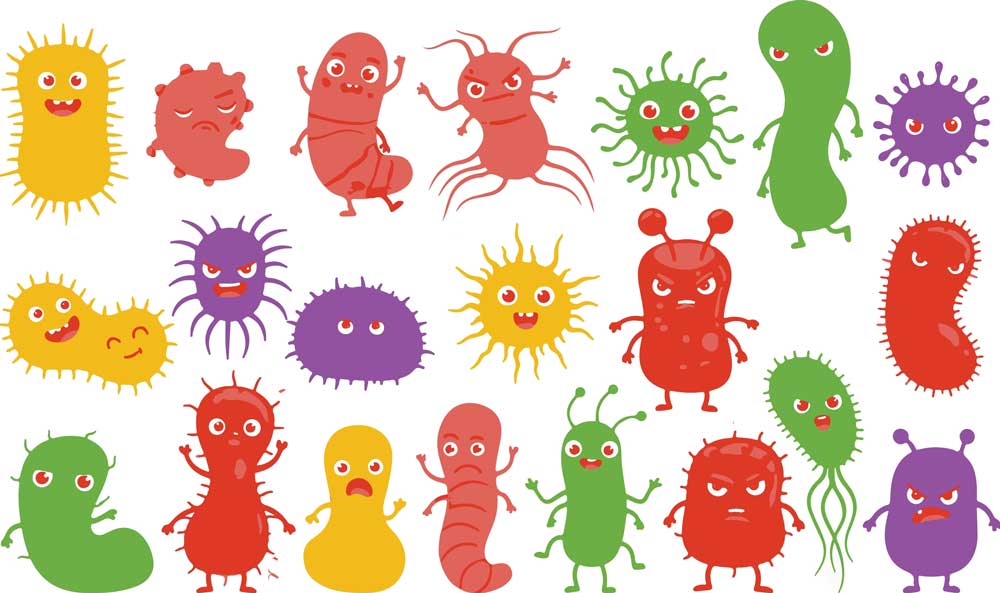
What Are Viruses?
We often hear the term “computer virus”, which is, of course, malicious software (a program). It is itself just a collection of 0s and 1s and is not a living organism, of course. When that software invades (infects) a PC, it causes various troubles. In other words, a computer virus can do nothing on its own, but once it invades an external entity called a computer, it starts to act like a living organism.
The original virus behaves very similarly to a computer virus. (Or rather, it is correct to say that a computer virus is very similar to the original virus.) The main body of a virus is genetic information, that is, nucleic acid (DNA or RNA), and has a structure in which proteins surround the nucleic acid. Extremely speaking, a virus is a substance consisting of nucleic acid as its main body and surrounding proteins. Therefore, viruses do not have cells, and since they are chemical substances, viruses can be crystallized.
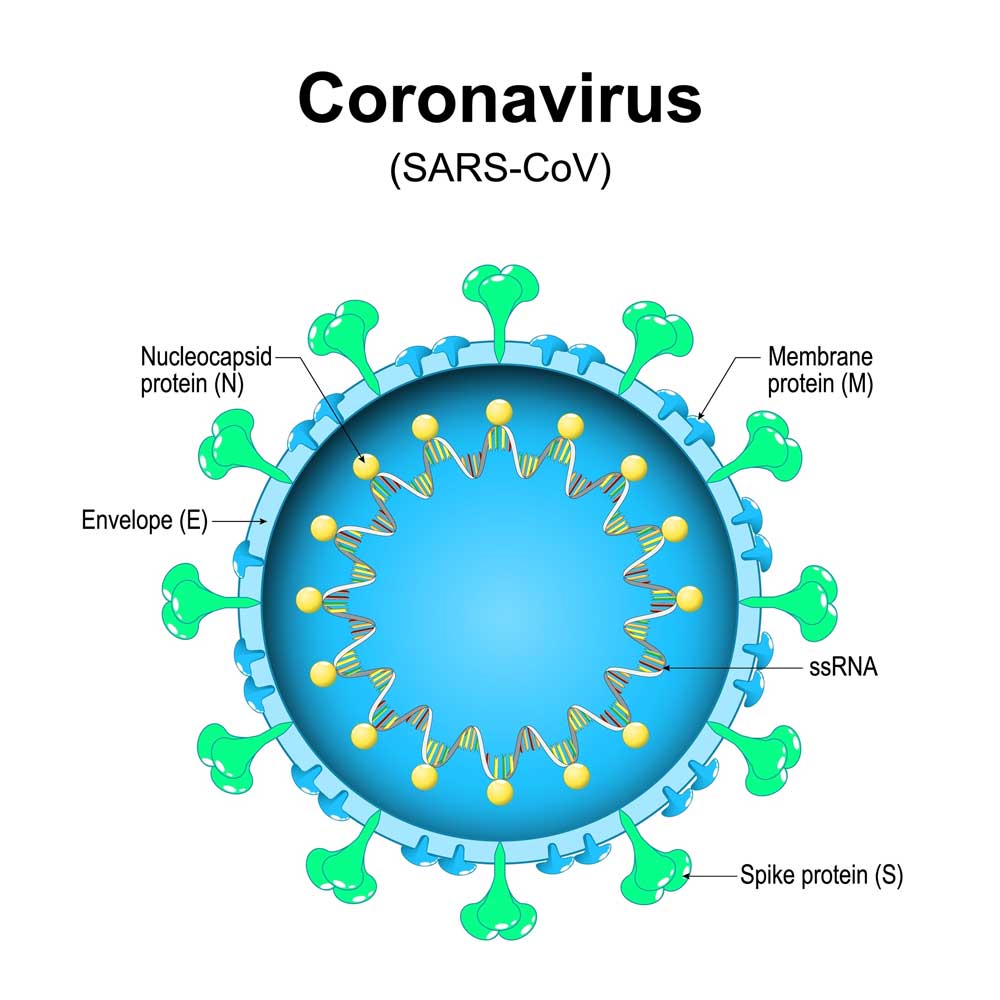
Although viruses are chemical substances, once they invade the cells of another living organism, they can create (replicate) themselves using the biological functions of those cells. Viruses multiply themselves in other cells and destroy the cells when they break out. This is a viral disease.
Generally, the size of viruses is about several tens to several hundreds of nanometers (nm; 10-9 meters), which is 2-3 orders of magnitude smaller than general bacteria. However, like the aforementioned giant bacteria, giant viruses such as Pandoravirus or Mimivirus, which are almost the same size as bacteria, have also been discovered in viruses.
Speaking of viruses, the COVID-19 pandemic spread worldwide from 2020 to 2023. Therefore, the image of pathogens is inevitably strong, but not all viruses are pathogenic. The number of virus types is said to be 30,000 or more than 1 million, but only about 650 are known to be pathogenic.
Viruses are substances with only genetic information and cannot eat (take in nutrients) or proliferate on their own. To proliferate, they need living cells of another organism. They invade cells other than themselves and proliferate by synthesizing themselves there. Cells other than themselves include various animals/plants such as humans, animals, plants, fish, and insects. Even bacteria are targets. Viruses that infect bacteria are called bacteriophages. In this way, viruses are organisms that survive thanks to living cells (organisms) other than themselves.
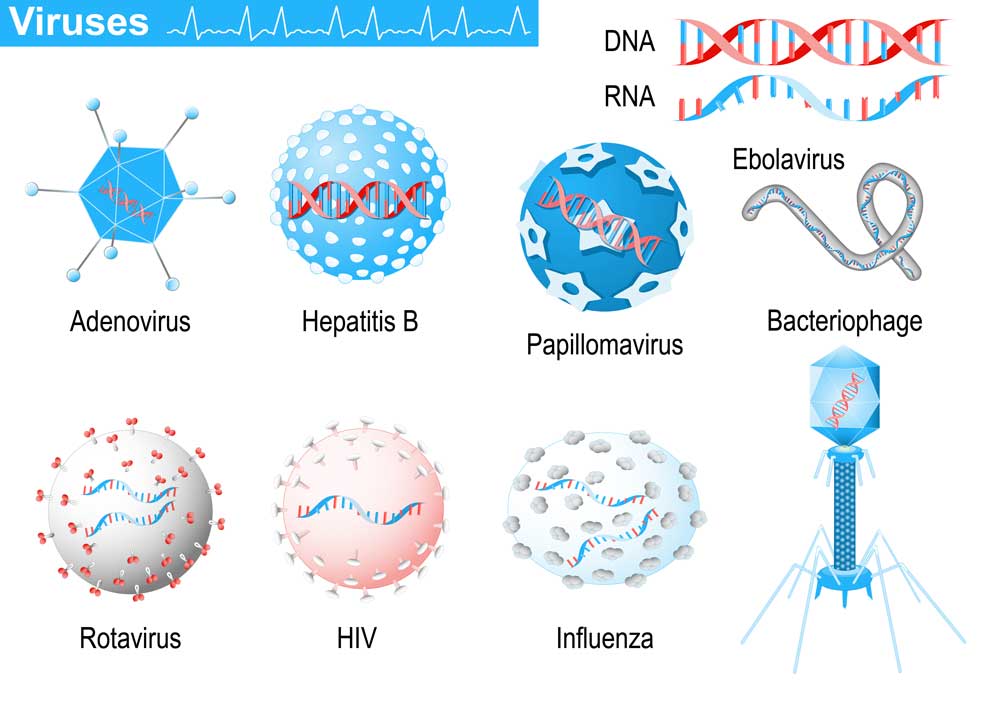
Some can infect both humans and animals, such as zoonotic diseases, but in many cases, the target of infection is fixed.
Ordinary meat sold in supermarkets is not alive. Therefore, viruses cannot use it. In other words, unlike bacteria, they do not use meat to proliferate (spoil it). However, viruses attached to meat do not proliferate but remain alive (in a state of retaining infectivity) on the meat for a while. Therefore, eating insufficiently heated meat may lead to viral diseases such as norovirus food poisoning, hepatitis A, or hepatitis E.
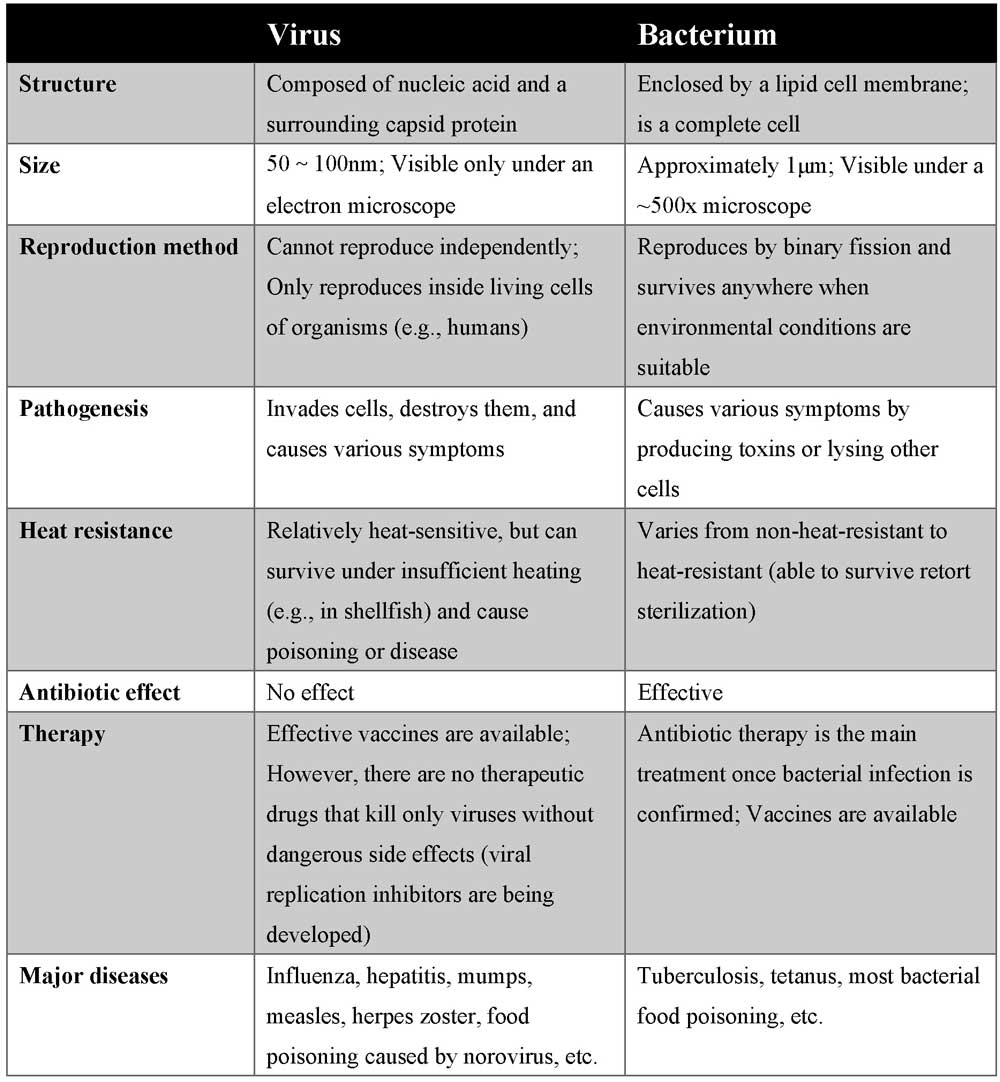
Bacteria and viruses are sometimes confused, but they are completely different. The main differences are as shown in the table below.
Author

Senior Consultant, GMP Platform, CM Plus Corporation
After working in sterilization management, microbiology, and quality assurance at Johnson & Johnson, Creative Medic, and Boston Scientific, he joined CM Plus, Inc. in 2013.
While working for the medical device manufacturer above, he participated in the Health and Welfare Science Research Group and various sterilization-related committees as a specialist in ethylene oxide sterilization.
About GMP Platform (https://www.gmp-platform.com/)

*If you are using Google Chrome, right-click and select “Google Translate” on the article.